
Axial Position Monitoring: Setting Up Thrust Protection That Actually Protects
How to set up thrust protection: float zones, two ways to set zero, setpoints from babbitt thickness and five field checks for when the alarm trips.

A Bently Nevada case study: why frame vibration alone cannot diagnose a reciprocating compressor, and what cylinder pressure and rod position add.

Bently Nevada's Orbit journal published a case from SK Energy's Ulsan refinery that is worth reading if you run reciprocating machines. Three booster compressors in the catalytic reforming unit were eating roughly 90% of the maintenance budget across a fleet of a hundred machines. Valves failed, pistons cracked, and nobody could say why.
The short version: contamination in the process gas formed sticky residue in the cylinders. Valves stuck, effective compression ratio climbed, discharge temperatures rose, and components failed. The fix combined process changes, stronger valve and piston designs, and — the part that interests us — a rebuilt monitoring system.
The original system measured frame and crosshead vibration plus basic process values. That is enough to know a machine is unhappy. It is not enough to know why.
Adding cylinder pressure transducers and rod position probes changed that. With pressure and crank angle together, System 1 builds P-V diagrams — and a P-V diagram shows a sticking valve directly, as a distortion in the compression curve, before anything breaks.
We see the same gap on plants across the region. Reciprocating compressors are often instrumented like centrifugal ones: a couple of vibration channels on the frame and nothing inside the cylinder. That setup protects the machine from catastrophic failure but tells you almost nothing about valve condition, and valves are what actually fail.

If you are budgeting an upgrade for a reciprocating machine, cylinder pressure is where the diagnostic value is. It is the difference between scheduling a valve change and discovering the problem when the piston cracks.
The full case study, including the failure analysis and results, is published by Baker Hughes: https://www.bakerhughes.com/bently-nevada/orbit-home/orbit-article/reliability-improvement-reciprocating-compressor-ccr
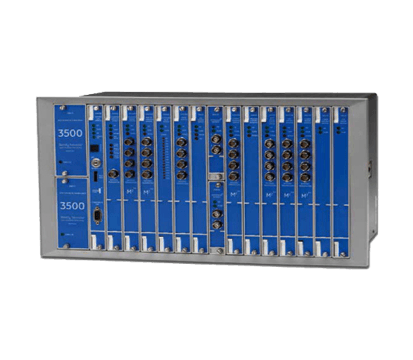
The industry-standard machinery protection system for critical rotating equipment, delivering continuous API 670-compliant monitoring and automatic shutdown protection.
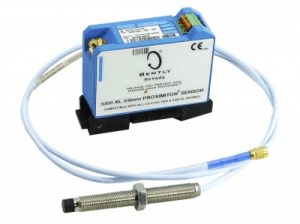
Eddy current probe and Proximitor transducer systems for axial and vibration displacement measurement on large rotating machinery.
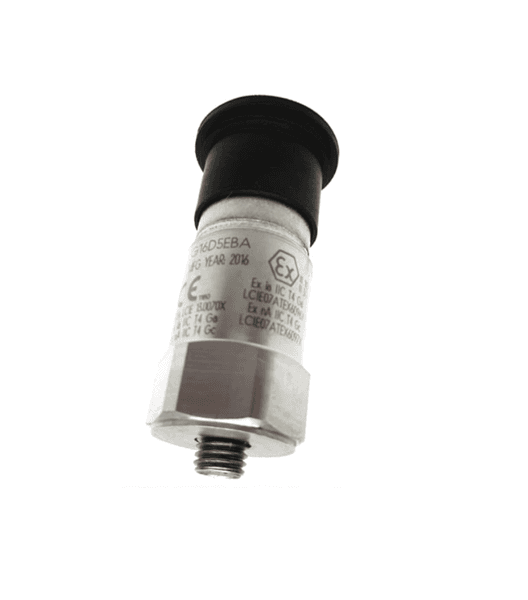
Industrial accelerometers and Velomitor velocity sensors for casing and bearing-housing vibration measurement on a wide range of machinery.
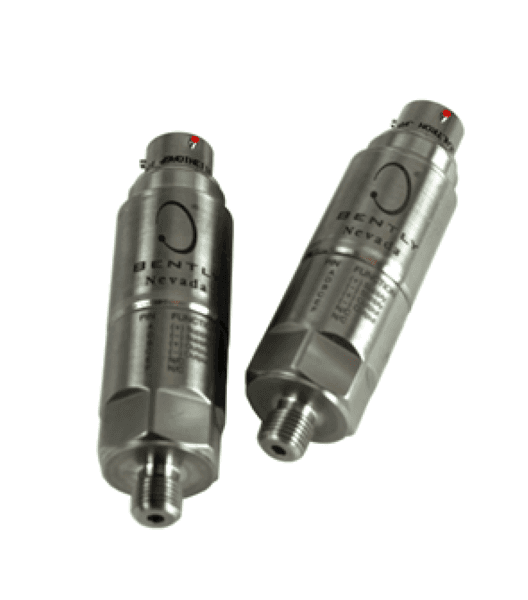
Dynamic pressure sensors for detecting pulsation, cavitation, surge and combustion instability in pumps, compressors and turbines.

Bently Nevada’s enterprise condition monitoring and diagnostics platform for fleet-wide asset health, combining data from online systems, portable devices and process historians.
How to set up thrust protection: float zones, two ways to set zero, setpoints from babbitt thickness and five field checks for when the alarm trips.

A practical guide to selecting vibration monitoring: equipment types, criticality assessment, stationary versus portable systems, and integration.

What Orbit 60 changes compared with the 3500: architecture, configuration, alarming, self-diagnostics and cybersecurity, and when to choose each platform.